



Digital violence against migrants
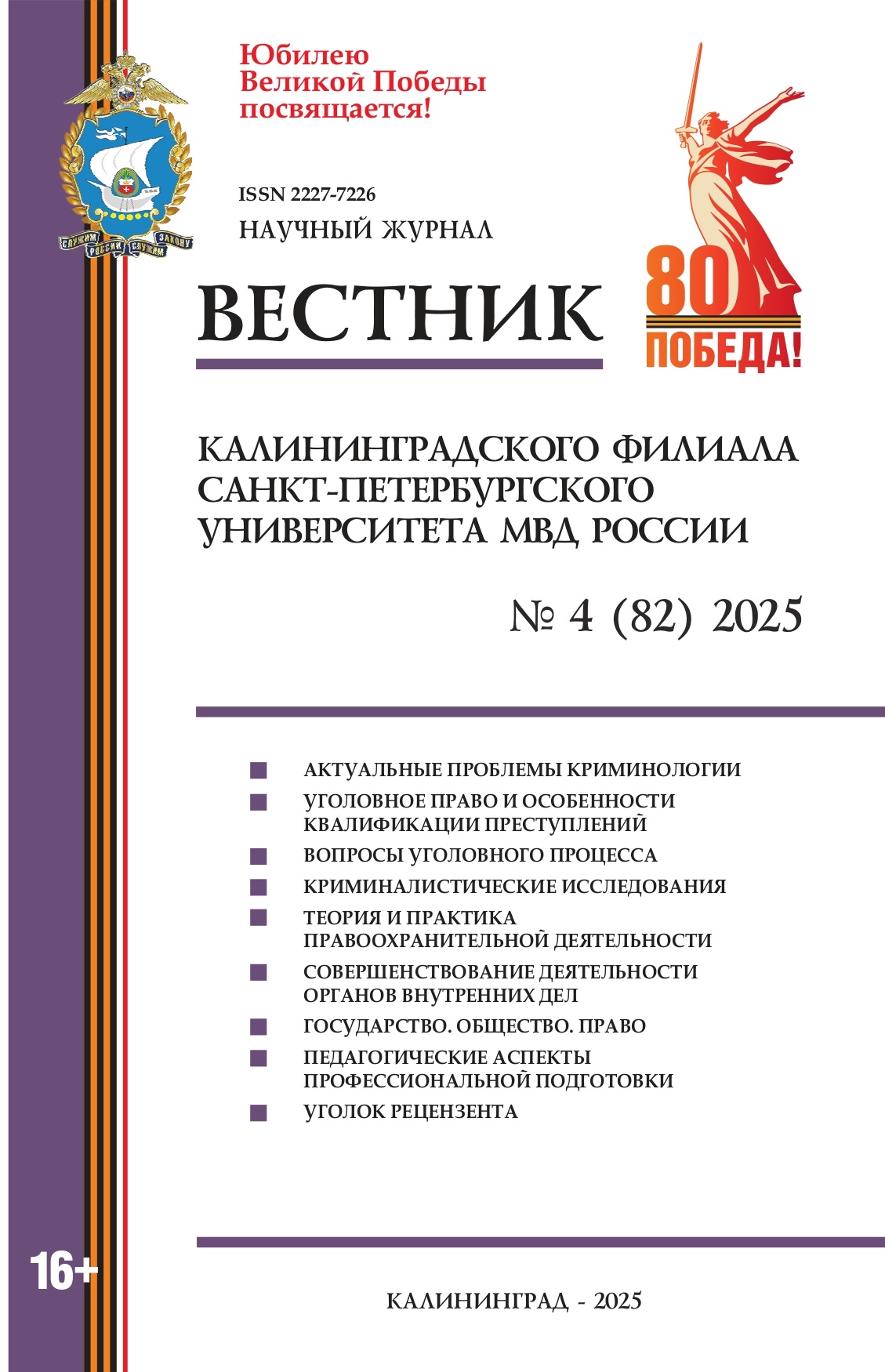
Journal: BULLETIN OF THE KALININGRAD BRANCH OF THE SAINT-PETERSBURG UNIVERSITY OF THE MINISTRY OF INTERNAL AFFAIRS OF RUSSIA
№ 4
, 2025
Rubrics: CURRENT PROBLEMS OF CRIMINOLOGY

Authors:
1.
Kaliningrad branch of the federal state government educational institution of higher education "St. Petersburg University of the Ministry of Internal Affairs of the Russian Federation"
(Department of Criminal Law. criminology and criminal-executive law, associate professor of the department)
Kaliningrad branch of Saint Petersburg University of the Ministry Internal Affairs of Russian Federation (Department of Criminal Law, Criminology and Criminal-Executive Law, Associate Professor of the Department)
employee
Kaliningrad, Kalinigrad, Russian Federation
Kaliningrad branch of Saint Petersburg University of the Ministry Internal Affairs of Russian Federation (Department of Criminal Law, Criminology and Criminal-Executive Law, Associate Professor of the Department)
employee
Kaliningrad, Kalinigrad, Russian Federation
Type:
Article
Pages:
from 26
to 36
Status:
Published
Received:
14.11.2025
Accepted:
14.11.2025
Published:
22.12.2025
Language:
Russian
Keywords:
Digital violence, migrant, migrant victimization, latency, countering digital violence, international cooperation.
Abstract:
Introduction. The article examines digital violence against migrants. The insufficient scientific research on this phenomenon and the need for further study are emphasized. In this case, increased attention is required to the issues of crime latency and victimization of migrants, including Russian citizens abroad. Research should contribute to the development of an effective, comprehensive mechanism for countering this type of violence. In this regard, it may be useful to study and adapt foreign experience in implementing modern practices for organizing such counteraction to domestic conditions. Methods. The methodological basis of the study, the results of which are reflected in the article, is the dialectical method, which made it possible to consider digital violence as a dynamic phenomenon. A statistical method was used to work with data from the UN, Ministry of the Interior of Russia and the Judicial Department under the Supreme Court of the Russian Federation, characterizing the dynamics of migration flows and crime rates. The comparative analysis method was applied to compare domestic and foreign experiences in countering digital violence. In addition, methods of abstraction, generalization, and analysis were used. Results. The phenomenon of digital violence against migrants, including members of the Russian diaspora abroad, should be studied given the high victimization rate of victims and the latency of these types of attacks. This article defines digital violence against migrants as unlawful psychological and emotional pressure exerted through information and telecommunications technologies, aimed at causing moral, physical, or property harm to a migrant against their will, exploiting their vulnerability. The article presents the key factors contributing to the high level of migrant victimization in the digital environment: low digital and legal literacy, enclavization, and language barriers. It also examines the forms of digital violence against migrants and related trends, particularly the emergence of increasingly anonymous online recruitment and exploitation mechanisms that increase the latency of criminal acts. Recommendations for countering digital violence against migrants are provided. They envisage the introduction of advanced technologies into the prevention system, as well as the improvement of criminal legislation by establishing violence of this type as an aggravating circumstance.
Introduction. The article examines digital violence against migrants. The insufficient scientific research on this phenomenon and the need for further study are emphasized. In this case, increased attention is required to the issues of crime latency and victimization of migrants, including Russian citizens abroad. Research should contribute to the development of an effective, comprehensive mechanism for countering this type of violence. In this regard, it may be useful to study and adapt foreign experience in implementing modern practices for organizing such counteraction to domestic conditions. Methods. The methodological basis of the study, the results of which are reflected in the article, is the dialectical method, which made it possible to consider digital violence as a dynamic phenomenon. A statistical method was used to work with data from the UN, Ministry of the Interior of Russia and the Judicial Department under the Supreme Court of the Russian Federation, characterizing the dynamics of migration flows and crime rates. The comparative analysis method was applied to compare domestic and foreign experiences in countering digital violence. In addition, methods of abstraction, generalization, and analysis were used. Results. The phenomenon of digital violence against migrants, including members of the Russian diaspora abroad, should be studied given the high victimization rate of victims and the latency of these types of attacks. This article defines digital violence against migrants as unlawful psychological and emotional pressure exerted through information and telecommunications technologies, aimed at causing moral, physical, or property harm to a migrant against their will, exploiting their vulnerability. The article presents the key factors contributing to the high level of migrant victimization in the digital environment: low digital and legal literacy, enclavization, and language barriers. It also examines the forms of digital violence against migrants and related trends, particularly the emergence of increasingly anonymous online recruitment and exploitation mechanisms that increase the latency of criminal acts. Recommendations for countering digital violence against migrants are provided. They envisage the introduction of advanced technologies into the prevention system, as well as the improvement of criminal legislation by establishing violence of this type as an aggravating circumstance.
Keywords:
Digital violence, migrant, migrant victimization, latency, countering digital violence, international cooperation.
Digital violence, migrant, migrant victimization, latency, countering digital violence, international cooperation.