



Transnational organized environmental crime
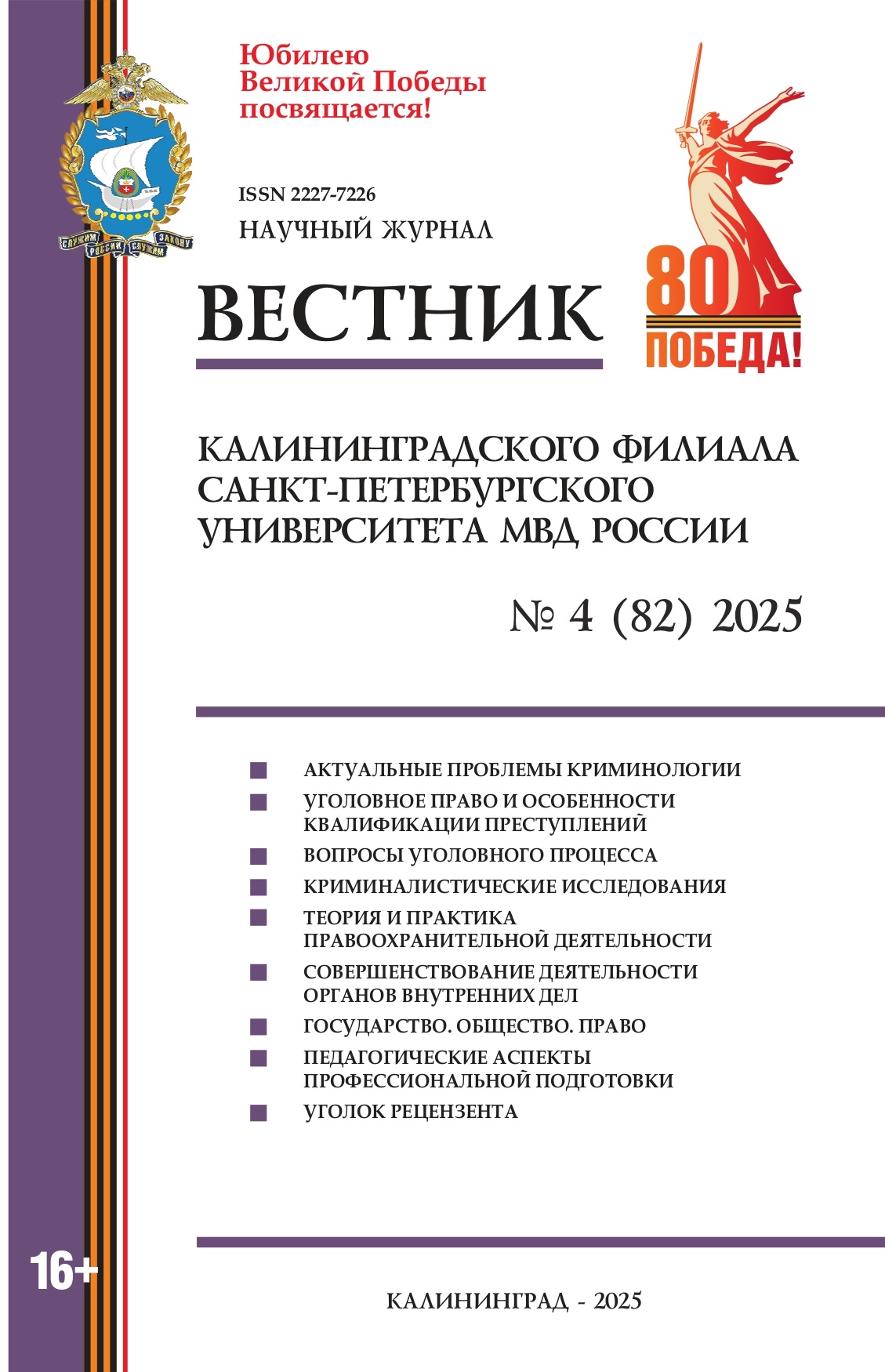
Journal: BULLETIN OF THE KALININGRAD BRANCH OF THE SAINT-PETERSBURG UNIVERSITY OF THE MINISTRY OF INTERNAL AFFAIRS OF RUSSIA
№ 4
, 2025
Rubrics: CURRENT PROBLEMS OF CRIMINOLOGY


Authors:
1.
Saint Petersburg University of the MIA of Russia
Russian Federation
Russian Federation
Type:
Article
Pages:
from 37
to 44
Status:
Published
Received:
29.08.2025
Accepted:
11.10.2025
Published:
22.12.2025
Language:
Russian
Keywords:
Crime, types of crime, organized crime, transnational organized crime, environmental crime, transnational organized environmental crime.
Abstract:
Introduction. Organized environmental crime, which has now acquired a transnational character, poses an increased danger to society and the state. It is not limited to national borders and causes colossal harm to ecological systems on a global scale. Before conducting the study, the results of which are presented in this article, the author set the following objectives: to study the characteristics of transnational organized crime and determine which of them are characteristic of organized environmental crime of a transnational nature; to consider its main types; to analyze the consequences of transnational environmental crimes committed by organized criminal groups; to identify the peculiarities of counteracting the most common crimes of this kind. Methods. The study utilized general and specific scientific methods, including systemic-structural, formal-logical, and comparative-legal. Results. Organized environmental crime of a transnational nature is proposed to be understood as systematic and coordinated activities of organized criminal groups carried out on the territory of several states, which are aimed at committing environmental crimes (illegal trade in endangered species of wild fauna and flora; illegal, unregulated and unregistered fishing carried out in violation of control measures introduced by various regional fisheries organizations; illegal trafficking in timber and timber products; illegal movement and disposal of hazardous waste; illegal trade in prohibited pollutants, etc.).
Introduction. Organized environmental crime, which has now acquired a transnational character, poses an increased danger to society and the state. It is not limited to national borders and causes colossal harm to ecological systems on a global scale. Before conducting the study, the results of which are presented in this article, the author set the following objectives: to study the characteristics of transnational organized crime and determine which of them are characteristic of organized environmental crime of a transnational nature; to consider its main types; to analyze the consequences of transnational environmental crimes committed by organized criminal groups; to identify the peculiarities of counteracting the most common crimes of this kind. Methods. The study utilized general and specific scientific methods, including systemic-structural, formal-logical, and comparative-legal. Results. Organized environmental crime of a transnational nature is proposed to be understood as systematic and coordinated activities of organized criminal groups carried out on the territory of several states, which are aimed at committing environmental crimes (illegal trade in endangered species of wild fauna and flora; illegal, unregulated and unregistered fishing carried out in violation of control measures introduced by various regional fisheries organizations; illegal trafficking in timber and timber products; illegal movement and disposal of hazardous waste; illegal trade in prohibited pollutants, etc.).
Keywords:
Crime, types of crime, organized crime, transnational organized crime, environmental crime, transnational organized environmental crime.
Crime, types of crime, organized crime, transnational organized crime, environmental crime, transnational organized environmental crime.